How Many Light Fixtures Do You Need In Each Room
The right type of lighting can turn your Sarasota home into a glowing coastal sanctuary, even after the sun sets over the keys. But trying to figure out how many lights to place in each room can be difficult if you don’t have a professional lighting plan. Here at Mister Sparky, we’re pros at designing and installing lighting setups that maximize both beauty and functionality.
What Are Lumens?
When you go shopping for bulbs, take a closer look at the lumens rather than the wattage. Think of lumens as the actual “oomph” of light hitting your countertops rather than just the power the bulb draws.
It’s usually best to aim for a specific lumen per square foot, but the room’s use also impacts how much brightness you want. Take a relaxing sunroom as an example. It will need far fewer lumens than a high-traffic cooking space where you’re handling sharp knives and hot surfaces.
The Affects of Color Temperature
Color temperature plays an essential role in how many light fixtures you need in each part of the house. You can turn certain rooms into cozy retreats or high-energy workspaces. It’s your home and completely up to you as to the atmospheres you want to create.
Warm Light (2700K-3000K)
Warm light produces a golden hue, creating inviting spaces that promote relaxation. Homeowners often place this type in dens and bedrooms where they want a soft, candle-like glow.
Neutral Light (3500K-4100K)
When you want clean, balanced white light, opt for the 3500K to 4100K range. You’ll have clear visibility for everyday chores with less eye strain.
Cool Light (5000K-6500K)
Cool light gives you that blue-toned brightness that is very similar to natural daylight. It does a good job at increasing alertness in home offices and garages.
How Does Layered Lighting Work?
You can layer different types of light fixtures to achieve unique ambiances that perfectly balance shadow and light. The versatile illumination lets you turn any dimly lit area into functional space for entertaining or relaxation.
- Ambient lighting: Provides general illumination for comfortable room visibility.
- Task lighting: Focuses bright light onto specific work surfaces.
- Accent lighting: Highlights architectural features or precious pieces of art.
- Decorative lighting: Acts as a stylish centerpiece for visual interest.
- Recessed lighting: Offers a clean look with hidden ceiling fixtures.
Where to Place Light Fixtures in Each Room (and How Many)
Many homes in Sarasota feature large open floor plans with high ceilings. Putting a single chandelier or lone flush-mount light in the middle of each space won’t suffice in providing even coverage. The following tips give you great starting points for customizing each living area with the perfect balance of brightness.
Living room (6–9 fixtures)
Four or six recessed cans mounted on a central ceiling fan with a light kit should be sufficient for a typical 250-square-foot living room. Add two floor lights next to the sofa and chairs, and maybe a picture light to showcase your most treasured seaside artwork.
Dining room (1–4 fixtures)
Place a single chandelier with warm, dimmable bulbs or soft LED filaments directly over the dining table. The light should serve as a focal point for illuminating the entire centerpiece and tabletop. For larger dining rooms, consider two recessed wall washers or subtle accent lights along the perimeter or a nearby buffet.
Kitchen (7–11 fixtures)
The kitchen is where you need the most lighting for cooking and cleaning. Five to eight recessed lights positioned about three feet apart should provide enough unobstructed brightness. One or two pendant lights over the kitchen island will give you focused task lighting for preparing meals. Under-cabinet LED strips along the bottom of your upper cabinets are a great idea for deep countertops with dark corners.
Bedrooms (2–4 fixtures)
You want lighting as simple as possible in the bedrooms because you don’t want it to be a focal point or overwhelmingly bright. Placing a central overhead fixture, like a low-profile flush mount or ceiling fan, will keep the entire room from feeling cluttered. If you want softer light for nighttime reading or winding down, install a floor lamp or stylish table lamp on the nightstand.
Bathroom (1–3 fixtures)
The number of lights to install in the bathroom depends on the length of the vanity. A 3-light fixture should be enough for a standard 36-inch sink area. For smaller bathrooms, a single sconce or slim LED bar over the mirror provides plenty of illumination. Just make sure the lights are damp-rated.
Half bathroom (powder room) (1–2 fixtures)
Vertical and slim-profile vanity lights are a top pick for half baths because of their streamlined look and space-saving versatility. Depending on the room’s layout, you may be able to mount them directly to the side walls, saving even more space for decorative mirrors or shelving.
Laundry room (2–4 fixtures)
It’s much easier to spot-spray laundry with stain remover when you have direct task lighting along the underside of your shelving. You may also want to install LED light bars near your washer and dryer so you don’t have to deal with shadows from overhead fixtures. If you have a larger laundry room, you can place a recessed can or small flush-mount light by the folding station.
Home office (2–4 fixtures)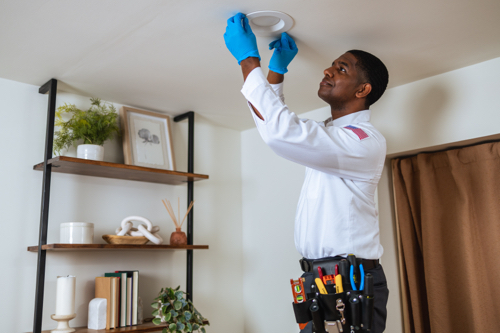
Home offices benefit the most from bright lighting placed in several strategic spots. For example, you can place a recessed LED or track lighting fixture right above your desk and a floor lamp or wall sconce light next to your reading chair. Adding lamps with flexible arms lets you adjust the angle of the beam according to the time of day or task.
Get Expert Lighting Guidance Today
We love helping Sarasota homeowners set up lighting that perfectly matches their personal style and coastal lifestyle. We’re experts at installing smart dimmers to run automated schedules and dedicated circuits to resolve flickering issues. We’ll help you design a custom lighting plan that not only elevates your home’s beauty but also saves money on monthly utility bills.
Contact Mister Sparky today to learn all about premium lighting solutions and how to create the perfect coastal ambiance for your Sarasota home.
Frequently asked questions
What’s the difference between lumens and watts?
Lumens measure the actual brightness of light emitted, while watts measure how much energy a bulb uses. When choosing bulbs, focus on lumens to get the right brightness for each room watts alone don’t tell you how bright a light will be.
How many light fixtures does a typical kitchen need?
Kitchens generally need 7–11 fixtures. A good setup includes 5–8 recessed lights spaced about three feet apart, 1–2 pendant lights over the island for task lighting, and under-cabinet LED strips for deep countertops.
Do bathroom light fixtures need to meet any special requirements?
Yes, bathroom light fixtures must be damp-rated to safely handle moisture and humidity. The number of fixtures depends on vanity size: a single sconce or LED bar works for smaller bathrooms, while a standard 36-inch vanity typically calls for a 3-light fixture.
How do I know if I need a professional lighting plan?
If your home has large open floor plans, high ceilings, or you’re dealing with flickering issues or uneven coverage, a professional can design a custom plan that balances aesthetics and function and may even help lower your monthly energy bills with smart dimmers and efficient fixtures.
